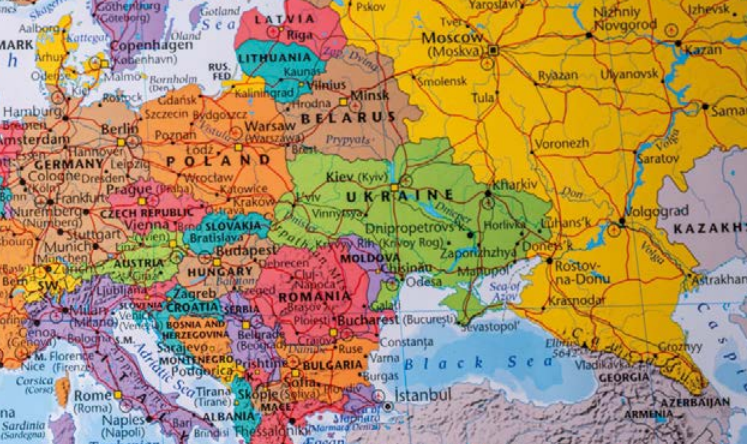
As civil unrest continues in Turkey, Willis is highlighting potential gaps in insurance cover among the repercussions of the unrest. “Turkey is in the midst of the biggest anti-government street protests since the AKP took power more than a decade ago," says Andrew van den Born, executive director in Willis’ political and trade credit risks division. "But after being elected to his third term two years ago with 50% of the vote, besides denting his image abroad and exposing the increasing polarisation of Turkish society, the last two weeks of protest is unlikely to have any immediate impact upon Erdogan’s government.”
Companies are finding it increasingly difficult to control their supply chains at a time when the cost of failure is higher than ever, according to Airmic. Case studies examined during the research included the grounding of the Boeing 787 Dreamliner, the Japanese earthquake and tsunami, Thailand floods, Nestlé's Kit Kat attacked by Greenpeace for using unsustainable supplies of palm oil, Mattel recall of millions of toys.
KPMG has concerns as to whether the recommendations from the long-term guarantees assessment impact study will be mutually satisfactory to all parties, and hence whether the insurance industry will be saved from further delays to the Solvency II timeline.
A key milestone in the path to formal implementation of Solvency II, the EIOPA report on the findings and recommendations of the long-term guarantee assessment has been released. The European insurance industry has over E7 trillion assets under management and, in turn, is a significant funder of long term investment, so where the rules end up will have ramifications for the capital markets more broadly.

A report published today highlights how insurance companies are concerned about what conduct risk really means in practice, including both direct and B2B and B2C operating models. There is increasing recognition that further work is necessary in establishing an underlying conduct risk framework, through which conduct risk is managed from board level to the rest of the company.
AIG UK has today launched airside premises and contractors liability protection, offering clients limits of indemnity and up to US$50m of war and terrorism cover included as standard. Airports in the UK are seeing increasing passenger numbers and general air traffic resulting in increased demand for airside services.
The way many companies report their risk management activity is opaque, lacking in detail and detached from overall corporate strategy, according to the risk management association Airmic and ICSA. The two organisations will urge the Financial Reporting Council to tighten up risk reporting when it updates the UK Corporate Governance Code later this year.
RSA has renewed a contract to provide motor insurance to Motability Operations. The new deal takes effect from 1st October 2013 for an initial five years. The deal will be on a quota share arrangement with RSA retaining 20% of the premium exposure, ceding the balance to a Motability Operations owned captive
In response to this week’s demonstrations running up to the G8 annual meeting, the Cross-sector Safety and Security Communications group (CSSC) has issued the following protective security points, which summarise guidance from a Centre for the Protection of National Infrastructure (CPNI) publication on the same.
The worst European flood event in a decade extended into another week as the death toll rose to at least 23. The most significant damage was experienced in southern and northeastern Germany after the Elbe and Danube rivers (along with their tributaries) overflowed their banks. Elsewhere, floodwaters were receding in the Czech Republic, Slovakia, Austria, Switzerland, Poland and Hungary. Also, severe flooding affected southern and eastern China, killing at least 15 people.

Airmic delegates identified cyber crime and data privacy as the most concerning risk facing their business, according to research performed by ACE at Airmic this year. Environmental risk was rated a distant fourth place with only four per cent of attendees citing this as a top risk for their business.
Airmic has produced a guide and model wording to raise awareness among its members and counteract the impact of basis clauses, which often lie buried in insurance contracts and can result in legitimate claims not being paid. Basis clauses have been criticised by the Law Commission and no longer apply in relation to consumer insurance.
Two thirds of workers don’t receive enough information when their companies go through change such as layoffs, increasing the risk of misconduct, a report finds. Unsurprisingly, the report cited reducing pay as the most risky form of change, tripling the risk of bullying, discrimination and alcohol/drug abuse.
The recent horsemeat scandal brings the issues of supply chain risk management and product recall once again to the fore. Deborah Ritchie reports
Social media is creating a paradigm shift in the way the world communicates. Defining exactly what that means is key in enabling its substantive opportunities
Europe’s largest ever single civil engineering project, Crossrail carries just as much risk as it does opportunity. Trevor Morton gets to grips with its ERM approach
Deborah Ritchie speaks to Frank Armstrong, former assistant commissioner of the City of London Police
Deborah Ritchie speaks to David Ross is CEO of Arthur J. Gallagher International, the trading platform for AJG & Co
Deborah Ritchie speaks to Chris McBrayne, of IBM's Business Continuity and Resiliency Services business.
A radical review of health and safety legislation, which looked set to reduce the burden of health and safety regulation on businesses, is now slowly taking shape amongst companies
Helen Grimberg considers the emerging risk consequences for retailers of a changing legal and commercial reality
It is easy to forget moments when new technology really impressed you. Seeing the very first spreadsheet was one such wow moment. It was in 1980 when VisiCalc landed on these shores...